Showing posts with label Poem. Show all posts

Exercise: In The Midst of Hardship


Complete all the questions given and send to my email, undian88@yahoo.com

1. When did the people in the poem return home?
   _______________________________________________________

2. What kind of a setting do you see in the poem, ‘ In the Midst of Hardship’
    by Latiff Mohidin?
   _______________________________________________________
   _______________________________________________________

3. Describe the conditions of the people in this poem.
   _______________________________________________________

4. Despite the conditions of the people in the above poem, did they give up?
    Which line tells you this?
    _______________________________________________________

5. What do you understand by ‘ but on their brows, there was not a sign of despair’?
   ________________________________________________________

6. What natural disaster had occurred to the place?
   ________________________________________________________

7. Name the animal that had gone missing in this poem.
   ________________________________________________________

8. Do you think the people in the poem are rich? Justify your answer with evidence
    from the poem?
    _______________________________________________________
    _______________________________________________________

9. Why do you think the people are desperately looking for the lost animal?
    _______________________________________________________

10. What is alliteration? Give an example of alliteration from the poem.
   ________________________________________________________

11. Do you think the people here are hopeful and optimistic? Justify your answer.
   ________________________________________________________
   ________________________________________________________
   ________________________________________________________

12. What can you learn from this poem?
   ________________________________________________________

13. Do you think the poet has chosen a good title for this poem? Give a reason for
      your answer.
     _______________________________________________________
     _______________________________________________________

14. Do you like the poem? Give a reason for your answer.
    ________________________________________________________
    ________________________________________________________
Read more »

Video: In The Midst of Hardship


Watch this following video and write a short paragraph of your emotions towards it. Email your answer here; undian88@yahoo.com


Read more »

Exercise: He Had Such Quiet Eyes


Please answer all these questions below and email them to me.

1. The eyes have a lot of functions other than seeing. Explain one function of the eyes that
     you know and give an example when that function is being used.
    _________________________________________________________________
    _________________________________________________________________

2. Do you believe in ‘seeing is believing’? Give a reason for your answer and relate it to
    the poem “He had such quiet eyes”.
    _________________________________________________________________
    _________________________________________________________________

3. Why do you think the persona in the poem fell for the guy’s quiet eyes? Give a reason
    why she likes his ‘quiet eyes’.
   _________________________________________________________________
   _________________________________________________________________

4. How can you help a friend who fell for a person who you know is a pleasure seeking
    person? Give a suggestion on how to help this friend.
    ________________________________________________________________
    ________________________________________________________________

5. In the poem there is a phrase “how’s and why’s”. Form a question for each of the
    question in the phrase with close relation to the situation of the persona in the poem.
    ________________________________________________________________
    ________________________________________________________________
6. Which one is easier to do, giving advice or listening to advice? Give a reason for
    your answer with close reference to the poem.
    ________________________________________________________________
    ________________________________________________________________
Read more »

He Had Such Quiet Eyes


He Had Such Quiet Eyes

He had such quiet eyes
She did not realise
They were two pools of lies
Layered with thinnest ice
To her, those wuiet eyes
Were breathing desolate sighs
Imploring her to be nice
And to render him paradise
If only she’d been wise
And had listened to the advice
Never to compromise
With pleasure-seeking guys
She’d be free from ‘the hows and whys’
Now here’s a bit of advice
Be sure that nice really nice
Then you’ll never be losing at dice
Though you lose your heart once or twice

-Bibsy Soenharjo


Stanza 1
Literal Meaning
When the persona looked into the young man’s sincere-looking eyes, she was deceived into thinking that he needed someone to love. She was not aware that betrayal was second nature to him. His eyes even made her feel compelled to be ‘nice’ to him.

Figurative Meaning
Meeting people and getting involved in a social relationship is part and parcel of life. However, along the way, we may meet two-faced people with ulterior motives. Sometimes, they may come across as so sincere that we innocently accept them as friends or partners.

Stanza 2
Literal Meaning
When the persona was betrayed by the man, she wondered why she had not been wiser. She should have remembered the age-old advice of not believing man blindly. If she had held on to her principles, she would not be asking herself why she had been cheated.

Figurative Meaning
Social relationships can turn sour if one party betrays the other. Hence, one should be careful of the other party’s motives. In any case, do not compromise your principles, as someone who is sincere would not force you into giving up your morals.

Stanza 3
Literal Meaning
The poet advises young ladies to be more careful before getting involved in relationships with men. They must make sure they know then men well. They should learn to differentiate between sincerity and falsehood. They will eventually meet the right man, though they may lose their heats to a few times before that.  

Figurative Meaning
It is always good to be cautious before committing to a relationship to avoid serious consequences. You have to make sure you can trust the person you befriend. Do not gamble with your affections, even when you fall in love.

Themes

(1) Strong Moral Values and Self-Respect
The woman in the poem got herself into a difficult situation and was cheated by a man because she gave in to his pleading and his insincere lies. She displayed weakness in her moral standing and lost her self-respect as a result. We should never lower our self-esteem no matter how much we like a man. If a man has respect for the woman he loves, he too would not ask her to do what is morally wrong.

(2) Deception in Appearances
The woman is taken in by the man’s gentle and quiet eyes. She thinks he is a truthful and trustworthy person. The theme in this poem focuses on deception in appearances. Do not judge a person’s character by his appearance. As can be seen in this poem, a gentle and kind-looking man can actually be a wolf in sheep’s clothing.

(3) Consequences
When we make mistakes in life, we have to live with the consequences. The persona tells us that the woman is haunted with questions of ‘hows and whys’. She probably asks herself every day how she could have fallen for his lies; how she could have forgotten the moral values instilled in her by her parents; how she could have ignored all the advice given to her by people who love and care about her. She would probably also wonder why she had not been wiser in her choice of men; why she did not see through his deception and insincerity.

(4) Listen to Advice
The poet wants to reach out to all young readers. The woman in the poem wished she ‘had listened to the advice’. She poured out her disappointment, frustration and hurt in this poem and wished she had ‘been wise’. The poet cautions young readers that they should not be impulsive in their actions and they should, above all, listen to the advice of their elders so that they would not end up like the woman – full of regrets.

Moral Values & Lessons Learnt
We sometimes encounter people who have ill intentions towards us.
(1) Avoid Being Deluded by Looks or Appearance
These are con men who prey on young women.
They look nice and decent but have bad motives.
So we should take precaution against them.
We should not judge a book by its cover.

(2) Listen to Beneficial Advice
We are given good advice when others feel that we need it.
We should listen to their advice.
The advice is for our own good.
It prevents us from getting hurt or getting into trouble.

Setting

The poem is set in the present – the world around us now.
It highlights the fact that the people around us are not always sincere.
They may have ulterior motives towards us.
Some have the intention to cheat us.
In the case of the woman in the poem, the man only wanted to have sexual pleasure from her.
However, she saw him as a man in need of love and consolation.
The poem puts forward the need to practise caution when we deal with the people around us.

credit: ipsi86um96.blogspot.com


Read more »

In The Midst of Hardship


In The Midst of Hardship

At dawn they returned home
their soaky clothes torn
and approached the stove
their limbs marked by scratches
their legs full of wounds
but on their brows
there was not a sign of despair

The whole day and night just passed
they had to brave the horrendous flood
in the water all the time
between bloated carcasses
and tiny chips of tree barks
desperately looking for their son’s
albino buffalo that was never found

They were born admist hardship
and grew up without a sigh or a complaint
now they are in the kitchen, making
jokes while rolling their cigarette leaves

-Latiff Mohidin


Synopsis

This poem tells of the hardship that a family in a village faces after a big flood. The elders return at dawn in soaking-wet clothes. They go straight to the kitchen. They are probably hungry. Their hands and legs are bruised but they do not show any sign of despair or of losing hope.

After braving the dreadful flood for the last 24 hours, they still can not find their son’s albino buffalo. Despite all the adversities and suffering, the people in the poem do not complain or lament on their misfortunes. They spend time together, enjoying each other’s company. They are grateful for the fact what they still have instead of what is lost. Life goes on with their daily chores of preparing food and habit of rolling their cigarette leaves. They are still able to joke with one another.

SYNOPSIS  ( ACCORDING TO STANZA)

STANZA 1

They returned home at dawn and headed for the stove. Their clothes were soaking wet and tattered. Their bodies were covered with scratches and wounds. Yet, they did not display any signs of being worried.

STANZA 2

They were out in the flood the whole day and night. They were surrounded by dead animals and parts of trees that had been destroyed by the flood. They searched desperately for their son’s albino buffalo but were unable to find it.

STANZA 3

They were born into poverty and difficulty, but they do not complain about their suffer. Instead, they sit in the kitchen, cracking jokes while smoking cigarettes.

SETTING

The setting of the poem is in the house.

THEMES

Stoicism in life
Family love
Acceptance of way of life

MORAL VALUES

We should learn to accept problems in life with a positive outlook.
We must attempt to face and solve problems.
Failure is part of growing up.
Do not despair in the face of failure.

TONE, MOOD, ATMOSPHERE

Understanding and sympathetic
Dismal
Acceptance of situation

POINT OF VIEW

Third person pint of view.

LANGUAGE & STYLE

Language is simple and easy to understand.
The style is simple with no rhyming scheme.

POETIC DEVICES

Imagery – Gives picture of poet’s thoughts e.g ‘soaky clothes torn’ and ‘legs full of wounds’
Alliteration – e.g. ‘but on their brows’
Symbols – e.g. ‘horrendous flood’ and ‘bloating carcasses’
Diction – e.g. ‘stove’ and ‘brows‘

credit: thelitpath.wordpress.com

Read more »

The River : Interesting Comparisons


Valerie Bloom's poem, "The River" is an interesting short poem.

She describes to us what a river meant to her. The river is to her, many things.
She personifies the river and compares it to many things. What are these things she says of the river?

i. A wanderer, a nomad and a tramp:

A wanderer is a person who likes to move. He does not to stay in one place.

A nomad belongs to a wandering group of people that moves from place to place in search of food or a better environment to stay.

A tramp is like a beggar and a vagabond. He goes from place to place to look for alms and lives off the generosity of kind people. A tramp is normally seen as a lazy bum.

ii. A winder:

The term comes from the word, ‘to wind’. To wind means to move from one side to another in curves. It cuts through soft soils but it goes around hard rocks. As such, it loops and wounds itself on the way down. It does not chart a straight path.

iii. A hoarder:

Just like human beings, a river also likes to keep its secrets and its treasures. So, it hides these in the bed where it is difficult for others to take them away.

iv. A baby:

When a river moves down stream or down a waterfall, gurgling noises are heard. The poet likens this to a baby innocently sucking on its thumb in sheer delight.

v. A singer:

When the river falls through a waterfall, the poet imagines it to be singing and dancing and this joy is spread to the surrounding areas for all to enjoy.

vi.A destroyer:

Finally, for all the joys it gives to us, it can also destroy. During a flood, the river rages and kills. Human beings, animals, houses and vegetation including trees and crops are destroyed.

credit: ipsi86um96.blogspot.com
Read more »

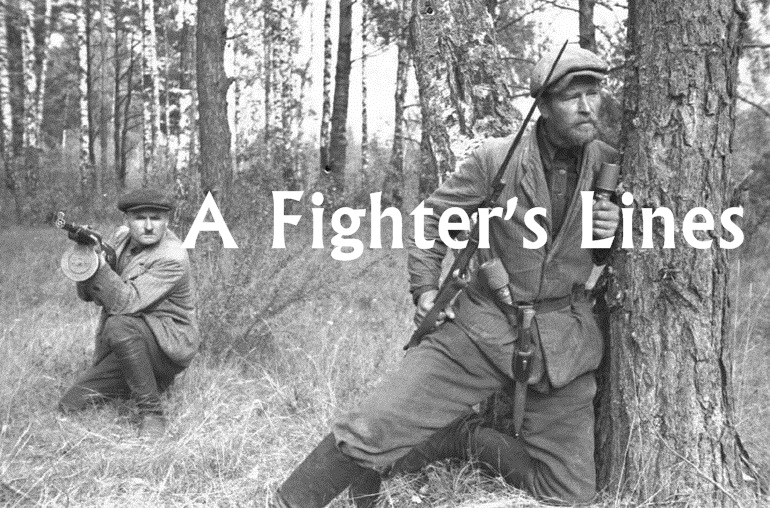
Video: A Fighter's Lines


Write a short paragraph of your own interpretation of the video.
Email your answer here; undian88@yahoo.com

Read more »

Exercise: The River


Let us have a test exercise on Valerie Bloom’s lively and lovely poem, ‘The River’.
Here goes-
1.       How many stanzas are there in ‘The River’?
a)      5
b)      6
c)       7
d)      8

2.       Pastoral people who move from place to place in search of food and water are called
a)      Campers
b)      Nomads
c)       Caravan people
d)      Vagrants

3.       To be ‘vexed’ means to be
a)      worried
b)      angry
c)       irritated
d)      haunted

4.       What is the most likely reason a river ‘twists and turns’?
a)      river waters move in torrents
b)      river water moves in currents
c)       water moves from left to right
d)      it cannot cut through hard rocks

5.       To ‘gobbled’ means to
a)      eat in slow motion
b)      eat noisily and quickly
c)       eat slowly  in small mouthfuls
d)      eat in an easy relaxed manner

6.       When water goes down our throats, it may
a)      gurgle
b)      gargle
c)       gobble
d)      garble

7.       ‘The River’ uses plenty of metaphors. Which is the following is not a metaphor?
a)      baby
b)      winder
c)       singer
d)      treasures

8.       ‘The River’ is personified with a
a)      female gender
b)      male gender
c)       neutral gender
d)      no gender

9.       The poet describes ‘The River’ as if it is a
a)      monster
b)      person
c)       baby
d)      wanderer

10.   An angry river becomes a monster and
a)      swallows
b)      destroys
c)       gobbles
d)      crushed

submit your answers to my email, undian88@yahoo.com
thank you.

credit: ipsi86um96.blogspot.com
Read more »

Exercise: Mr. Nobody

 Complete the following crosswords. Email your answers here; undian88@yahoo.com


credit: http://teacheritadiary.blogspot.com/
Read more »

Leisure


Leisure by William Henry Davies 

  What is this life if, full of care,
We have no time to stand and stare.

No time to stand beneath the boughs
And stare as long as sheep or cows.

No time to see, when woods we pass,
Where squirrels hide their nuts in grass.

No time to see, in broad daylight,
Streams full of stars, like skies at night.

No time to turn at Beauty's glance,
And watch her feet, how they can dance.

No time to wait till her mouth can
Enrich that smile her eyes began.

A poor life this is if, full of care,
We have no time to stand and stare. 

Summary

The progression of science has rendered modern man a machine. Man has become a slave to time. No longer does mankind have any grasp to his primordial roots. William Henry Davies, a Georgian poet, realized mankind’s rapid transformation from quaint little farmers to massive cities of industrialization in the year 1911 with his eye opening poem “Leisure.” In William Henry Davies’s poem “Leisure,” time spent enjoying simple beauties is cherished and regarded as a forgotten pastime; Davies presents a cheery nostalgic tone with a short and crisp rhyme pattern that promotes joyful imagery within the reader and creates a humbling perspective on humanity.

The Structure

The poem is comprised of only seven couplets. Even the words Davies uses throughout the poem are simple. One could argue that Davies uses simple words in order to broaden his audience. A more complex interpretation of Davies choice of simplicity relates to the naturalistic theme of the poem. Like the structure of the poem, the interactions with nature demonstrated in the poem such as watching “squirrels hide their nuts in grass” (6) are unsophisticated. By using a simplistic structure and a simplistic word choice Davies reinforces the human necessity to appreciate the simple beauties in nature.

The repetition of the phrase “no time” (2) is used throughout the poem as indication of mankind’s dilemma. Davies realized mankind’s technology obsessd world back in 1911. One can only imagine what Davies would think of the world today. By stating that man has no time anymore to “stand and stare” (14), Davies is stating that humans “care” (13) to much about becoming prosperous in wealth. Davies, in a sense, is using satire to make nonsense of the way humans live as if they are most important beings in the world. Davies realizes how insignificant we all are in the grand scheme of the universe, and his transcendent thought is an underlying theme of the poem that can only be felt instead of understood.

Metaphor

To exaggerate mankind’s forgotten parent Mother Nature. The word “Beauty” (9) in line nine is capitalized as if it is a name. Beauty is a metaphor but also a name for Mother Nature. Using Beauty as name for Mother Nature is a very powerful statement. Davies is basically stating that the epitome of beauty, the virtue of beauty, is Mother Nature.

Even though man made technology is incredible in itself Davies realizes that nothing can be as incredible as even the most simplistic events in nature. Take for example rain or even the weather in general. Rain, snow, sleet, hail, they are all forms of weather. It is impossible for even the most creative of humans to fathom a form of weather totally unrelated to previous forms of weather. Every piece of technology humans create relates back to nature somehow. Every piece of technology mankind crafts is just a manipulation of the nature that was previously there. Nothing humans create can derive from something other than what is found in nature; therefore, the greatest piece of the entire everlasting universe is and always will be nature.

By using the structure of the poem as a symbol for the unique simplicity of nature, an expansive form of imagery is placed forward upon the reader. Davies truly is a poetic genius for using the extremely clever technique. It is weird to ponder how Davies was scared of industrialization’s impact on humanity a century ago when industrialization today has transformed into the mammoth giant of globalization. Davies’s poem “Leisure” is a truly incredible timeless classic of a poem as it will have the same humbling theme of nature’s supremacy forever.

Credit:http://whylifeis.blogspot.com/
Read more »

I Wonder


“I wonder” by Jeannie Kirby

I wonder why the grass is green
And why to each other we’re often mean?
Who taught us how to curse and hate?
And lead us to betray our faith?

Why can’t we learn to live and love?
And give all praises to him above
Why must we strive to put others down?
Why not wear a smile instead of a frown.

Must we forever devise new ways?
To hurt each other instead of praise?
For aren’t we all the same in his sight
Don’t we all rise in the morn and sleep at night?

For who amongst us has not shed a tear
Or hurt by another who never seemed to care.
And which of us has not done the same
To hurt another or caused some shame.

When shall we learn to let go of the past
And live each day like it’s our very last?
Which will you be, an foe or a friend?
Would you still hate today, if this was your end?

Don’t we yet know that it clouds our fate
When we ignore love and foster hate.
When hate fills your heart, it makes you blue,
For the person most hurt will always be you.

Lets rise each morning, smile and say
“Thank you God, for yet another day”
“Thanks for your love and tender care
And give me more love in my heart to share.


Literal meaning
A child is wondering about the natural happenings, asking why the grass is green (instead of the other colours) and why the wind is invisible. He or she continues to ponder the person who teaches the birds to build nest and the trees stop growing. He or she also wonders when the moon is in crescent shape, where the other part of the moon is.
He or she proceeds to question about the person who makes the stars shining and how the lightning flash about. He or she keeps on asking who colours the rainbow and puts the clouds high in sky. He or she cannot get the answers, thus, directs the questions to the other. Lastly, the child wonders why father doesn’t tell him or her if he knows the answers.

Persona(Speaker)
-a naive child
Point of view
-First person (‘I’ Wonder)

Setting
-Day to night, outdoor

Theme
-Curiosity
-The Power of Creator

Structure
-6 stanzas (6 couplets)
Rhyme Scheme
-regular (aa bb cc dd ee)
Tone
-questioning, curiosity
Mood
-reflective

Language
-simple, Wh-words/questions
Imagery
-nature (grass, wind, bird, moon, stars, lightning, rainbow, clouds)
Poetic Devices
-Personification ("trees...take a rest")
-Alliteration ("grass is green", "birds to build")

Moral Values
-We should be observant and sensitive to out surroundings
-We should always cultivate a sense of wonder in our heart
-We should appreciate and take care of the nature created by our Creator

#Bite Eng's Review
Reading through the poem, the questions are those common questions asked by most children. These questions are identical to our questions that we asked when we were child. For example, "Why the sky and sea are blue?", "Why I can smell it but can't touch it?", "Why we grow taller each day", "Can I pluck the shining star?", "Why the sky is bright during daytime and yet dark at night?", etc. Most children are curious in nature. Adults might find their questions naive and funny. However, the sense of wonder is essential as the motivation to drive them to seek for the answer. With the questions in mind, their curiosity urges them on finding the solution. Thus, they are those scientists-to-be, doctors-to-be, geologists-to-be, astronomers-to-be, teachers-to-be, etc. Thus, the message here is to cultivate the sense of wonder in our children's heart and avoid killing their interest to know about their surroundings.

Reading the questions posed, effort is made to answer the questions:

I wonder why the grass is green, (The grass has chlorophyll which is green pigment.)
And why the wind is never seen? (The wind is moving air [gas] which cannot be seen.)

Who taught the birds to build a nest,
And told the trees to take a rest? (Our creator of nature did that.)

And when the moon is not quite round,
Where can the missing bit be found?
(We have Phases of moon. As the moon circles the Earth, its shape seems to change depending on the sunlight.)

Who lights the stars, when they blow out,
And makes the lightning flash about? (Again, our creator of nature did that.)

Who paints the rainbow in the sky,
And hangs the fluffy clouds so high?
(These are the art of work done by our creator of nature.)

Why is it now, do you suppose,
That Dad won’t tell me if he knows?
(Our Father..Almighty Lord would want us to be self-aware and able to appreciate his hard work.)

The message is that Our Father (The Creator) is almighty. We, as human being, are naive to understand the hard work done by Him. Instead of asking Him for answers for our doubts, we are obliged to carry on our mission to seek and gain the borderless knowledge and message conveyed by Our Father. Our Father may not give the whole knowledge directly, but He will guide us. One day, we will be enlightened with His knowledge for us.

Read more »

Heir Conditioning


Heir Conditioning by M. Shanmughalingam

Grand dad did you breathe
Before air cons were invented
Wasn't it hard staying
Alive without modern inventions
Gandma weren't you flustered
As you fluttered with paper fans
Could you communicate before
Faxes and long distance calls
Became basic necessities?
Grand child we lived
Before your age because
Of our ignorance,
We did not know
Pollution, stress, traffic jams
Destruction of forests, streams and hills
We feared God and nature
Now nature fears you and
Money is your new God

(source, Literature component form 1-3)


Summary

The poem talks about the differences on the ways of living of two different generations. The poet uses an interesting way of a question and answer session between a grandchild and his/her grandparents. The child questions his/her grandparents on how they could live without all the necessities they today’s generation could not live without such as air cons, fans, faxes and telephones. The grandparents replay one after another that even though the necessities were not yet invented to comfort them, they could live in comfort as their life were free from pollution, stress, traffic jams, destruction of forests, streams and hills. They warn their child that there is a price to pay when they do not fear God and appreciate nature. They have made money as their God and nature fears them because of the rapid pace of development and the destruction of the beautiful environment.


Stanza 1
In the first stanza the author questions on how in the past people managed to survived without modern invention such as air conditioning, hand phones and fax machines

Stanza 2
In the final stanza the author question on how future generations will live due to today's living standard. The author blames himself (his generation) for all the polutions that occur today and the destruction of mother nature. The highest power today accordint to the author is money and it controls everything (god like)


Theme

1. Technology Brings More Harm
It may seem that we are living in comfort with all the technology that keeps on improving, but we do not realize the harms that the technology has brought us. The grandchild thinks that it is impossible for their grandparents to live in comfort with the help of technology. The child does not realize that because of the technology itself, the world becomes hotter and that is the reason why some technologies are created to blind humans with the fake comfort that the technologies bring them. For example, electric fans and air cons. Technological advancements have other setbacks such us pollution, stress, traffic jams, and destruction of forests, rivers and hills.

2. Fear
The older generations were God-fearing people and respected His creation nature. However, today’s generation does not fear God. On the contrary the poet says that “now nature fears you and money is your new God”. This indicates that the younger generation has become more materialistic. They do not care for nature but gives priority to riches and money rather than practicing good values such as preserving God’s creation.

3. Importance of Preserving Nature
God created nature to preserve life. In stanza 2, the poet gives the consequences of not preserving nature -pollution, stress, traffic jams, destruction of forest, streams and hills. Humans seem not to aware that the more pollution they make, the more they need to preserve the nature. In paving the way for development, forest and hills have been destroyed and streams have been polluted. This has destroyed the natural habitat of many species of animals and plants which help to retain balance in our ecosystem.

Credit:
http://guyup-english.blogspot.com/2011/01/heir-conditioning-by-m-shanmughalingam.html
http://accordingtohomer.blogspot.com/2011/03/i-would-like-to-help-secondary-students.html


Read more »

Mr Nobody


Mr. Nobody

(Author Unknown)

I know a funny little man,
As quiet as a mouse,
Who does the mischief that is done
In everybody's house!
There's no one ever sees his face,
And yet we all agree
That every plate we break was cracked
By Mr. Nobody.

'Tis he who always tears our books,
Who leaves the door ajar,
He pulls the buttons from our shirts,
And scatters pins afar;
That squeaking door will always
squeak
For, Prithee, don't you see,
We leave the oiling to be done
By Mr. Nobody.

He puts damp wood upon the fire,
That kettles cannot boil;
His are the feet that bring in mud,
And all the carpets soil.
The papers always are mislaid,
Who had them last but he?
There's no one tosses them about
But Mr. Nobody.

The finger-marks upon the door
By none of us are made;
We never leave the blinds unclosed,
To let the curtains fade.
The ink we never spill, the boots
That lying round you see
Are not our boots; they all belong
To Mr. Nobody.


So this poem tells about the character called Mr. Nobody who does not exist. He is just being mentioned as the fall guy and must take all the blame around the house as if he truly exists in every house.

Let us look at the poem again.There are four stanzas. Let us look at the kind of mischief done by Mr. Nobody .

In Stanza 1.
·         He cracks plates.

In Stanza 2.
·         He tears books.
·         He does not close doors properly.
·         He pulls off shirt buttons.
·         He scatters pins.
·         He never oils the door which squeaks.

In Stanza 3
·         He puts damp wood upon the fire.
·         He muddies and soils the carpets.
·         He mislaid the newspapers.
·         He also tosses the papers around.

In Stanza 4
·         He leaves finger marks on the door.
·         He leaves the blinds unclosed.
·         He spills ink.
·         He leaves his books lying all over.

He did most of these nasty things. He also failed in his responsibility to do some chores. These included not oiling the squeaky doors, leaving the blind unclosed that will fade the house curtains and leaving his boots everywhere in the house.

Interestingly, no one has ever seen Mr. Nobody. Yet he is described as a small and quiet person.
When we read this poem, we can reflect the childhood days where oftentimes we behave irresponsibly and like to point fingers at others. We have yet to grow up, take responsibilities and admit our mistakes or own up to our failings.

So, the moral of the story is that everyone must be responsible; for that truly will be a sign that you have grown up.

Read more »

The River


The River by Valerie Bloom

The river’s a wanderer, a nomad, a tramp.
He doesn't choose any one place to set up his camp.

The river’s a winder, through valley and hill.
He twists and he turns, he just cannot be still.

The river’s a hoarder and he buries down deep
Those little treasures that he wants to keep.

The river’s a baby, he gurgles and hums
And sounds like he’s happily sucking his thumbs.

The river’s a singer, as he dances along
The countryside echoes the notes of his song.

The river’s a monster, hungry and vexed
He’s gobbled up trees and he’ll swallow you next.


Poet’s biography:

Valerie Bloom was born in 1956 in Jamaica, and she came to England in 1979. Now she travels around United Kingdom and abroad. Her poems is mostly known through her books—her own poems and anthologies she has edited. She also come out with a novels, and her poems had been printed in over 250 anthologies.

Poem analysis:

Subject: This poem is about the poet’s appreciation and perception of a river. The river in this poem is always written with capital letter as it is a proper name.

Theme: The River is beautiful, but capable of causing destruction.

This poem is delivered in an admiring and fearful tone, as the river have the potential to be good or bad and humans have no capability of controlling it. A lot of metaphors are being used along with personification in this poem, such as in the line “The River is a wanderer”.

Stanza 1:

The poet perceives the River as a living thing; in this stanza as a wanderer, a nomad, and a tramp, and it never makes a stop.

Stanza 2:

The River will never stop. Not even when there are obstacles in front of it, it will twists and turns and makes its way through valley and hills.

Stanza 3:

The poet perceives the River as a hoarder; which take and keep anything that it wants in the riverbed.

Stanza 4:

The River is being perceived as a baby. By saying that “he gurgles and hums”, the poet makes it clear that the river is happy; but nevertheless, as the River is a baby, it is unpredictable.

Stanza 5:

In this stanza, the poet perceives the River as a singer and a dancer, and she added that the countryside echoes with the notes of “his” song. This might shows that the River promised people with life.

Stanza 6:

In this last stanza, the River is being perceived as a monster—a hungry and vexed monster. The poet warned that “he” gobbled up trees and he will eventually swallow people, too. This shows the sheer destructive power the River has.

Glossary:

tramp (/træmp/)

 a person with no home, job or money who travels around and asks for money from other people

winder (/ˈwaɪn.dər/)

if a road, path or river winds, it follows a route which turns repeatedly in different directions

hoarder (hɔːrd)

to collect large amounts of something and keep it in a safe, often secret, place

vexed (/vekst/)

difficult to deal with and causing a lot of disagreement and argument

Read more »

A Fighter's Lines


A Fighter's Lines by Marzuki Ali

I am old and worn
and have lost all my strength
sufferings
and the history of the fight for independence
have forced sacrifices
that know no name
or life

from the wheelchair of the rest of my days
I, body and energy crushed
see and cannot do much
these times are too big a challenge
for the remnants of my crippled years
the net of deceit spread everywhere
disturbs me

In the name of justice
Wake up and form ranks sons of our ancestor
Be brave
And erect a wall of people
Stand up heirs of our freedom

I have no more voice
It is you now who should speak!
........................................................................................................

Written by Marzuki Ali, this poem talks about the feeling of a retired soldier who had fought for the country independence. This poem is looking from the first person point of view whom is a retired soldier as the poem uses the pronoun I , as lies in the stanza:

I am old and worn

and have loss all my strength

sufferings

and the history of the fight for independence

have forced sacrifices

that know no name

or life


From this Stanza, we know that the persona once had become a soldier and he had suffered a lot to free the country from invaders. During that time, they fought with all of their will and as the consequences now he is wheelchair bound due to the loss of energy and he is now old enough to only be able to sit on the wheelchair while monologues. This can be proven in the Stanza 2:

from the wheelchair of the rest of my days

I, body and energy crushed

After years of independence, the persona sees that the people are trying to destroy themselves by engulfing into the world full of lies. He says that there is nothing much he can do as he cannot control people’s mind as how he once did holding guns to destroy invaders. This is shown in the Stanza 2,

see and cannot do much

these times are too big a challenge

for the remnants of my crippled years

the net of deceit spread everywhere

disturb me


Due to the spreading of lies, he now urges new generation to speak out their opinions and fight for their freedom. He tells us in order to fight for our freedom, first we have to be united, ‘erect a wall of people’ regardless of our races or religions and fight for the sake of our nation’s harmony. As lies in the Stanzas 3 and 4,


In the name of justice
Wake up and form ranks sons of our ancestors
Be brave
And erect a wall of people
Stand up heirs of our freedom

I have no more voice
It is you now who should speak!

Why does he write this poem? As most of countries nowadays are aiming to reach the highest level of developments, our country, Malaysia also do not want to miss it out. But, without we realize, we slowly losing our morality and our country slowly engulfing in a sea of lies. He stresses here that if we, as the younger generation cannot find the way to prohibit the dishonesties and lies, we are putting our country fate in a danger as this dishonesties can shake the stability of our country and the peace it possesses. That is why in the Stanza 4, he urges the younger generation to be united disregard of the races and religions to speak out their opinions. This is important as these lies able to distract the peace and harmony of our country and finally lead to fight.

the setting.

In this poem, there are two settings arranged. First is in an independent country. This is obviously shown by the line, ‘and the history of the fight for independence have forced sacrifices that know no name or life.’ The word ‘history’ connotes that the persona is reflecting the past he had. The second setting is an old man sitting on a wheelchair inside his abode. This can be proven from the Stanza 2 (Line 1), ‘from the wheelchair of the rest of my days’.

Theme

The important theme in this poem is patriotism. The persona’s experience of being a soldier and fought with the enemies and gone through hardships turned him to deeply love his country. But now he is old and disable and cannot do much to free his country from nowadays challenges. Even so because of his patriotism and he cannot bear to see the country sinks in the sea of lies, he urges the young to fight for it. He urges the younger generation to unite in spite of their differences and speak out the inequalities and dishonesties in the community so much so that the freedom retains.

Tones

In the Stanzas 1 and 2, the persona enhances the tone of frustration as he shares his disabilities and weariness of not being able to fight for the country anymore. They are proven by the line, ‘I am old and worn’. Not only that, the line ‘from the wheelchair of the rest of my days ‘, also symbolizes his disability which leads him to feel frustrated. He is worry of the deceits that spread everywhere nowadays as what he says in the line, ‘the net of deceit spread everywhere disturbs me’. His tone changes dramatically as in Stanzas 3 and 4, he goes from frustration to a fighting spirit where he eagerly urges the new generation to stand up and eradicate their fear of voicing out their opinions as stated in the line, ‘In the name of justice wake up and form ranks sons of our ancestor’ and ‘Be brave’. Besides that, he also stresses on the needs for the younger generation to be united and seek for their freedom as he clearly states in his lines, ‘And erect a wall of people’ and ‘Stand up heirs of our freedom’. In Stanza 4,, again he empathetically urges the younger generation to speak after him as now he is no longer strong to do so hence hopes for their voices to be heard as he stresses, ‘It is you now who should speak!’.

Symbols

First is the ‘wheelchair’ that connotes the disability. Through this symbol, one manages to imagine the persona’s condition, the hardships he went through before for the sake of achieving the country’s independence. Even though he is now wheelchair bound, he still has the will and determination to trigger the younger generation from their long asleep on how essential it is to retain the independence achieved from the sacrifices paid by the old generation like him. Besides that, another symbol represents in the poem is ‘a wall of people’ which connotes people uniting. In this poem, it refers to a need for the younger generation to unite themselves regardless any races, skin colors or backgrounds to speak for themselves, prohibit from being influenced by the deceits being spread nowadays. It is also essential for the younger generation to erect a wall of people to maintain the independence achieved by the persona’s generation efforts.

Metaphor

One can see there are two examples of metaphor use. In the Stanza 2 (Line 6), the persona uses ‘the net of deceit’ where he voices out what kind of problem encounters by the younger generation nowadays. He means how the modern generation deceives each other and how the deceit being spread day by day and it obviously bothers him. The next metaphor applies is in the Stanza 3 (Line 4), ‘a wall of people’ where the persona feels that the people need to be united and concrete as a wall to encounter any problems interfered. Only through this way, the eternity of independence the persona’s generation fought for may be preserved for the upcoming generations.


Credit: http://effa-dila.blogspot.com/

Read more »

Why literature?

"Literature is the expression on life through the medium of language"
anothercasualty_likeaboss. Powered by Blogger.

About Me

My photo
Family and Friends come 1st/A Harry Potter Maniac/ Missy Higgins Obsessed/ An Avril wannabe (Once upon a time)/ Have no sense of direction/ A first born/ Quiet unless spoken to/ Snakes are disgusting/ Nicol David an CT are my sisters from another mother ;P/ A Tennis Freak/ Short but taller in many ways/ Running out of words to say/ So.../ Holla if you want more.../