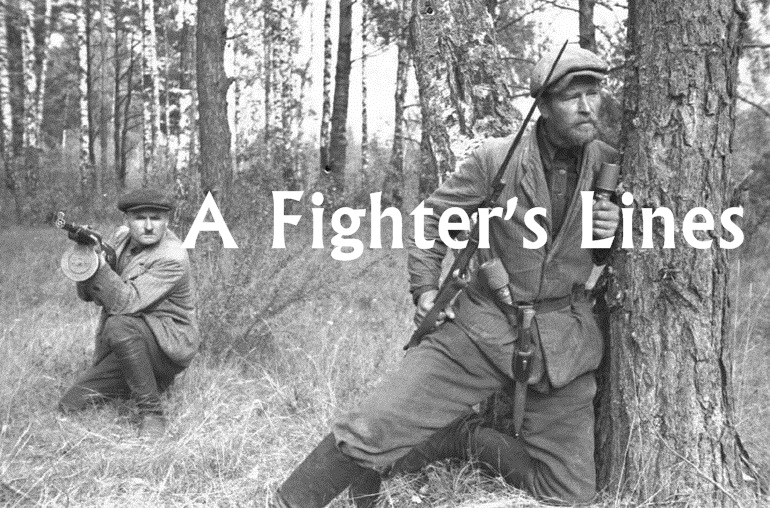
A Fighter's Lines by Marzuki Ali
I am old and worn
and have lost all my strength
sufferings
and the history of the fight for independence
have forced sacrifices
that know no name
or life
from the wheelchair of the rest of my days
I, body and energy crushed
see and cannot do much
these times are too big a challenge
for the remnants of my crippled years
the net of deceit spread everywhere
disturbs me
In the name of justice
Wake up and form ranks sons of our ancestor
Be brave
And erect a wall of people
Stand up heirs of our freedom
I have no more voice
It is you now who should speak!
........................................................................................................
Written by Marzuki Ali, this poem talks about the feeling of a retired soldier who had fought for the country independence. This poem is looking from the first person point of view whom is a retired soldier as the poem uses the pronoun I , as lies in the stanza:
I am old and worn
and have loss all my strength
sufferings
and the history of the fight for independence
have forced sacrifices
that know no name
or life
From this Stanza, we know that the persona once had become a soldier and he had suffered a lot to free the country from invaders. During that time, they fought with all of their will and as the consequences now he is wheelchair bound due to the loss of energy and he is now old enough to only be able to sit on the wheelchair while monologues. This can be proven in the Stanza 2:
from the wheelchair of the rest of my days
I, body and energy crushed
After years of independence, the persona sees that the people are trying to destroy themselves by engulfing into the world full of lies. He says that there is nothing much he can do as he cannot control people’s mind as how he once did holding guns to destroy invaders. This is shown in the Stanza 2,
see and cannot do much
these times are too big a challenge
for the remnants of my crippled years
the net of deceit spread everywhere
disturb me
Due to the spreading of lies, he now urges new generation to speak out their opinions and fight for their freedom. He tells us in order to fight for our freedom, first we have to be united, ‘erect a wall of people’ regardless of our races or religions and fight for the sake of our nation’s harmony. As lies in the Stanzas 3 and 4,
In the name of justice
Wake up and form ranks sons of our ancestors
Be brave
And erect a wall of people
Stand up heirs of our freedom
I have no more voice
It is you now who should speak!
Why does he write this poem? As most of countries nowadays are aiming to reach the highest level of developments, our country, Malaysia also do not want to miss it out. But, without we realize, we slowly losing our morality and our country slowly engulfing in a sea of lies. He stresses here that if we, as the younger generation cannot find the way to prohibit the dishonesties and lies, we are putting our country fate in a danger as this dishonesties can shake the stability of our country and the peace it possesses. That is why in the Stanza 4, he urges the younger generation to be united disregard of the races and religions to speak out their opinions. This is important as these lies able to distract the peace and harmony of our country and finally lead to fight.
the setting.
In this poem, there are two settings arranged. First is in an independent country. This is obviously shown by the line, ‘and the history of the fight for independence have forced sacrifices that know no name or life.’ The word ‘history’ connotes that the persona is reflecting the past he had. The second setting is an old man sitting on a wheelchair inside his abode. This can be proven from the Stanza 2 (Line 1), ‘from the wheelchair of the rest of my days’.
Theme
The important theme in this poem is patriotism. The persona’s experience of being a soldier and fought with the enemies and gone through hardships turned him to deeply love his country. But now he is old and disable and cannot do much to free his country from nowadays challenges. Even so because of his patriotism and he cannot bear to see the country sinks in the sea of lies, he urges the young to fight for it. He urges the younger generation to unite in spite of their differences and speak out the inequalities and dishonesties in the community so much so that the freedom retains.
Tones
In the Stanzas 1 and 2, the persona enhances the tone of frustration as he shares his disabilities and weariness of not being able to fight for the country anymore. They are proven by the line, ‘I am old and worn’. Not only that, the line ‘from the wheelchair of the rest of my days ‘, also symbolizes his disability which leads him to feel frustrated. He is worry of the deceits that spread everywhere nowadays as what he says in the line, ‘the net of deceit spread everywhere disturbs me’. His tone changes dramatically as in Stanzas 3 and 4, he goes from frustration to a fighting spirit where he eagerly urges the new generation to stand up and eradicate their fear of voicing out their opinions as stated in the line, ‘In the name of justice wake up and form ranks sons of our ancestor’ and ‘Be brave’. Besides that, he also stresses on the needs for the younger generation to be united and seek for their freedom as he clearly states in his lines, ‘And erect a wall of people’ and ‘Stand up heirs of our freedom’. In Stanza 4,, again he empathetically urges the younger generation to speak after him as now he is no longer strong to do so hence hopes for their voices to be heard as he stresses, ‘It is you now who should speak!’.
Symbols
First is the ‘wheelchair’ that connotes the disability. Through this symbol, one manages to imagine the persona’s condition, the hardships he went through before for the sake of achieving the country’s independence. Even though he is now wheelchair bound, he still has the will and determination to trigger the younger generation from their long asleep on how essential it is to retain the independence achieved from the sacrifices paid by the old generation like him. Besides that, another symbol represents in the poem is ‘a wall of people’ which connotes people uniting. In this poem, it refers to a need for the younger generation to unite themselves regardless any races, skin colors or backgrounds to speak for themselves, prohibit from being influenced by the deceits being spread nowadays. It is also essential for the younger generation to erect a wall of people to maintain the independence achieved by the persona’s generation efforts.
Metaphor
One can see there are two examples of metaphor use. In the Stanza 2 (Line 6), the persona uses ‘the net of deceit’ where he voices out what kind of problem encounters by the younger generation nowadays. He means how the modern generation deceives each other and how the deceit being spread day by day and it obviously bothers him. The next metaphor applies is in the Stanza 3 (Line 4), ‘a wall of people’ where the persona feels that the people need to be united and concrete as a wall to encounter any problems interfered. Only through this way, the eternity of independence the persona’s generation fought for may be preserved for the upcoming generations.
Credit: http://effa-dila.blogspot.com/